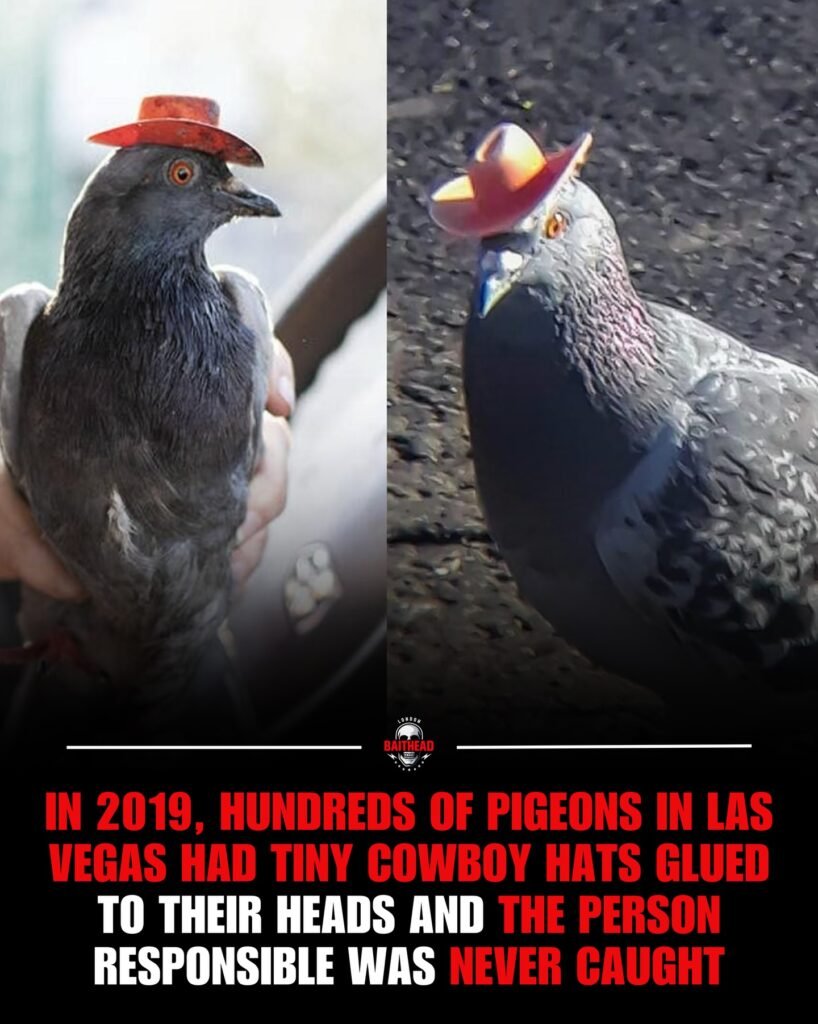
At first glance, the image feels like a playful joke: a city pigeon wearing a tiny cowboy hat, standing proudly as if it just stepped out of a Western film. But behind the humor lies one of the strangest urban mysteries to surface online in recent years—a story that blends absurdity, concern, and unanswered questions.
According to widely shared reports, in 2019 several pigeons in Las Vegas were discovered with miniature cowboy hats glued to their heads. Photos and videos quickly spread across social media, drawing laughter, disbelief, and eventually outrage. The hats, while comical to look at, raised serious concerns about animal welfare. Pigeons rely on their feathers and natural movement for balance, temperature regulation, and survival. Any foreign object glued to their bodies can cause stress, injury, or worse.
Animal advocates and local rescue groups stepped in to help. Some pigeons were successfully captured, the hats carefully removed, and the birds treated. Yet despite public attention and investigation, the person responsible for placing the hats was never officially identified. What remained was a mix of relief for the rescued birds and frustration over the lack of accountability.
The image captures this contradiction perfectly. On one side, it sparks laughter—a pigeon styled like a cartoon cowboy, almost charming in its oddity. On the other, it forces reflection on how easily animals can become props for viral entertainment. In the age of social media, where shock value often travels faster than empathy, the line between humor and harm can blur quickly.
More than just a strange headline, the cowboy-hat pigeon episode became a quiet reminder: animals share our cities, but they don’t consent to our jokes. What seems harmless or funny in a photograph may hide discomfort or danger just outside the frame.
In the end, the mystery remains unsolved—but the lesson endures. Compassion should always outlast clicks, and respect for living beings should never be optional, no matter how viral the moment.