
There’s something truly special about homemade egg noodles that transforms an ordinary meal into comfort food perfection. This simple yet satisfying recipe creates tender, golden noodles with a rich flavor and delightful texture that store-bought varieties simply can’t match. Whether you’re planning to serve them in a hearty chicken soup, toss them with butter and herbs, or use them as the foundation for a classic stroganoff, these homemade egg noodles will elevate any dish they grace.
Why You’ll Love This Recipe
Making homemade egg noodles is surprisingly simple and incredibly rewarding. You’ll love how just a few pantry staples transform into silky, tender noodles that cook perfectly every time. The process is therapeutic and satisfying, allowing you to control every ingredient while creating something truly from scratch. These noodles have a superior texture compared to dried pasta, with a slightly chewy bite that holds sauces beautifully. Plus, they freeze wonderfully, so you can make large batches and have fresh noodles ready whenever you need them. The rich, eggy flavor adds depth to any dish, making even the simplest preparations taste gourmet.
Ingredients You’ll Need

Dough:
- 2 cups all-purpose flour, plus more for dusting
- 1/2 teaspoon salt
- 2 large eggs
- 1/4 cup milk
- 1 tablespoon butter, melted
How to Make Homemade Egg Noodles
Step-by-Step Instructions:
Step 1: Prepare the Dough In a large mixing bowl, whisk together the flour and salt. Create a well in the center of the flour mixture. In a separate small bowl, beat the eggs, then add the milk and melted butter, whisking until well combined.
Step 2: Form the Dough Pour the egg mixture into the well in the flour. Using a fork, gradually incorporate the flour into the wet ingredients, starting from the inner edges of the well. Once the mixture becomes too thick to stir, use your hands to bring the dough together into a rough ball.
Step 3: Knead the Dough Turn the dough out onto a lightly floured surface. Knead for 8-10 minutes until the dough becomes smooth, elastic, and slightly glossy. The dough should feel soft but not sticky. If it’s too sticky, add a little more flour, one tablespoon at a time.
Step 4: Rest the Dough Wrap the kneaded dough in plastic wrap or cover with a damp kitchen towel. Let it rest at room temperature for 30 minutes. This resting period allows the gluten to relax, making the dough easier to roll out.
Step 5: Roll Out the Dough Divide the dough into two portions for easier handling. On a well-floured surface, roll each portion into a thin rectangle, about 1/8 inch thick. The dough should be thin enough that you can almost see through it, but not so thin that it tears easily.
Step 6: Cut the Noodles Let the rolled dough rest for 10 minutes until the surface feels slightly dry to the touch. Using a sharp knife or pizza cutter, cut the dough into strips of your desired width. For traditional egg noodles, cut strips about 1/4 to 1/2 inch wide.
Step 7: Separate and Dust Gently separate the noodle strips and toss them lightly with flour to prevent sticking. You can nest them loosely or spread them out on a floured baking sheet.
Step 8: Cook the Noodles Bring a large pot of salted water to a rolling boil. Add the fresh noodles and cook for 2-4 minutes, depending on thickness. Fresh noodles cook much faster than dried pasta, so watch them carefully. They’re done when they float to the surface and are tender but still have a slight bite.
Helpful Tips
Choose room temperature eggs for easier mixing and better dough consistency. When rolling the dough, work on a surface with just enough flour to prevent sticking, but not so much that it makes the dough tough. If you don’t have a rolling pin, a clean wine bottle works perfectly as a substitute.
For perfectly even noodles, fold the rolled dough loosely and cut through multiple layers at once, then unfold carefully. Don’t skip the resting time for the dough – this step is crucial for achieving the right texture. If the dough springs back while rolling, let it rest for another 10 minutes before continuing.
Details
Prep Time: 45 minutes (including resting time)
Cook Time: 3 minutes
Total Time: 48 minutes
Servings: 4-6 servings
Difficulty: Easy to Medium
Notes
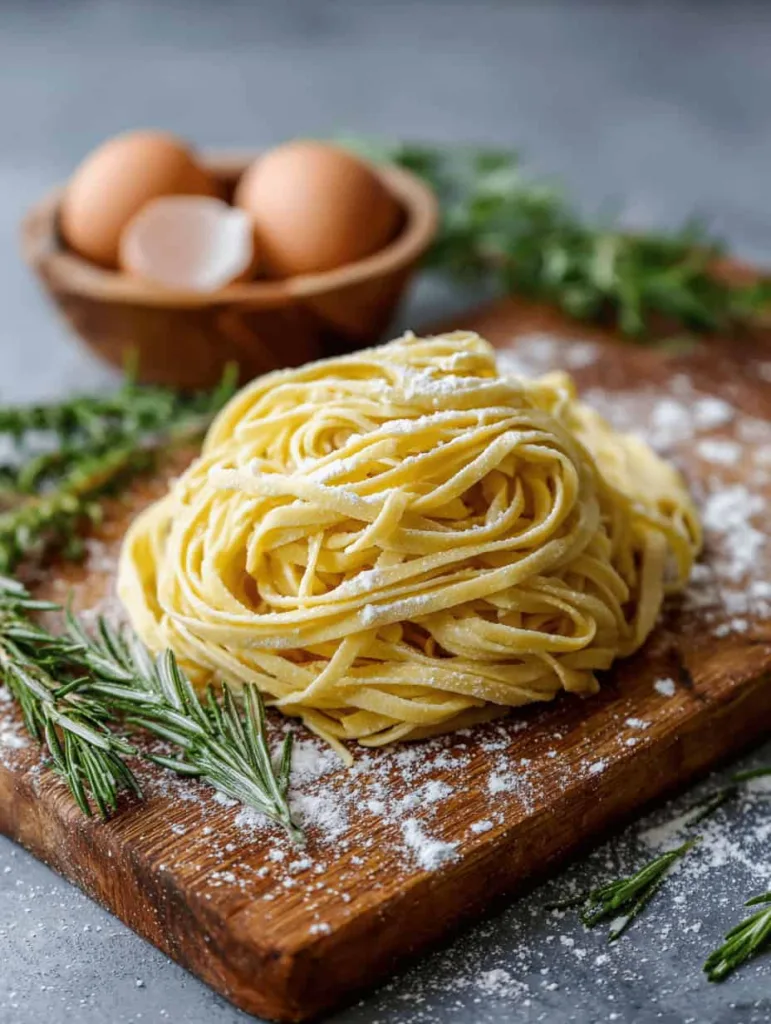
This recipe yields approximately 1 pound of fresh noodles. The dough can be made up to 24 hours ahead and stored in the refrigerator, wrapped tightly in plastic wrap. Fresh noodles can also be dried completely and stored like commercial pasta, though they’ll take longer to cook once dried. For extra richness, substitute one of the eggs with an additional egg yolk.
Frequently Asked Questions
Can I make egg noodles without a pasta machine? Absolutely! A rolling pin works perfectly for this recipe. Just take your time rolling the dough thin and even.
How do I know when the noodles are done cooking? Fresh egg noodles cook very quickly, usually in 2-4 minutes. They’re ready when they float to the surface and are tender when tested.
Can I freeze homemade egg noodles? Yes! Freeze them on a baking sheet until solid, then transfer to freezer bags. Cook directly from frozen, adding an extra minute or two to the cooking time.
Why is my dough too sticky or too dry? Humidity and flour types can affect the dough consistency. Add flour gradually if too sticky, or a teaspoon of water if too dry.
Can I use whole wheat flour? You can substitute up to half the all-purpose flour with whole wheat flour, though the noodles will have a denser texture and nuttier flavor.
Storage Instructions
Fresh egg noodles can be stored in the refrigerator for up to 3 days. Dust them lightly with flour and store in an airtight container or plastic bag. For longer storage, freeze the noodles on a baking sheet until solid, then transfer to freezer bags for up to 3 months. Cooked noodles can be refrigerated for up to 5 days and reheated in boiling water or the microwave.
Conclusion
Making homemade egg noodles is a simple pleasure that brings authentic, homestyle cooking to your kitchen. With just five basic ingredients and a little time, you can create noodles that are far superior to anything store-bought. The process is forgiving and adaptable, making it perfect for both beginners and experienced cooks. Once you taste the difference that fresh, homemade egg noodles make in your favorite dishes, you’ll find yourself returning to this recipe again and again. Whether served in a comforting soup or dressed simply with butter and herbs, these noodles are sure to become a beloved staple in your cooking repertoire.