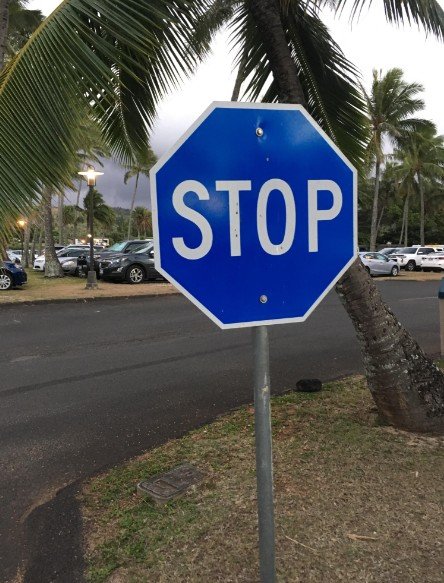
That strange blue stop sign is more than a design choice; it’s a test of how much you trust your instincts over the rules you’ve been taught. Officially, in the United States, a true stop sign must be red with white letters, backed by federal regulations and enforceable law. Blue doesn’t qualify. It belongs to private property, not public roads, and technically carries no government authority.
But that doesn’t mean it’s meaningless. Property owners, security teams, and businesses install blue stop signs to control risk where law books don’t fully reach: crowded parking lots, tight residential lanes, industrial yards, and branded campuses. If you ignore one and collide with another car or a pedestrian, “It wasn’t an official sign” won’t undo the damage. The safest rule is simple: when in doubt, stop. Color may define its legal power, but your reaction can define the outcome.