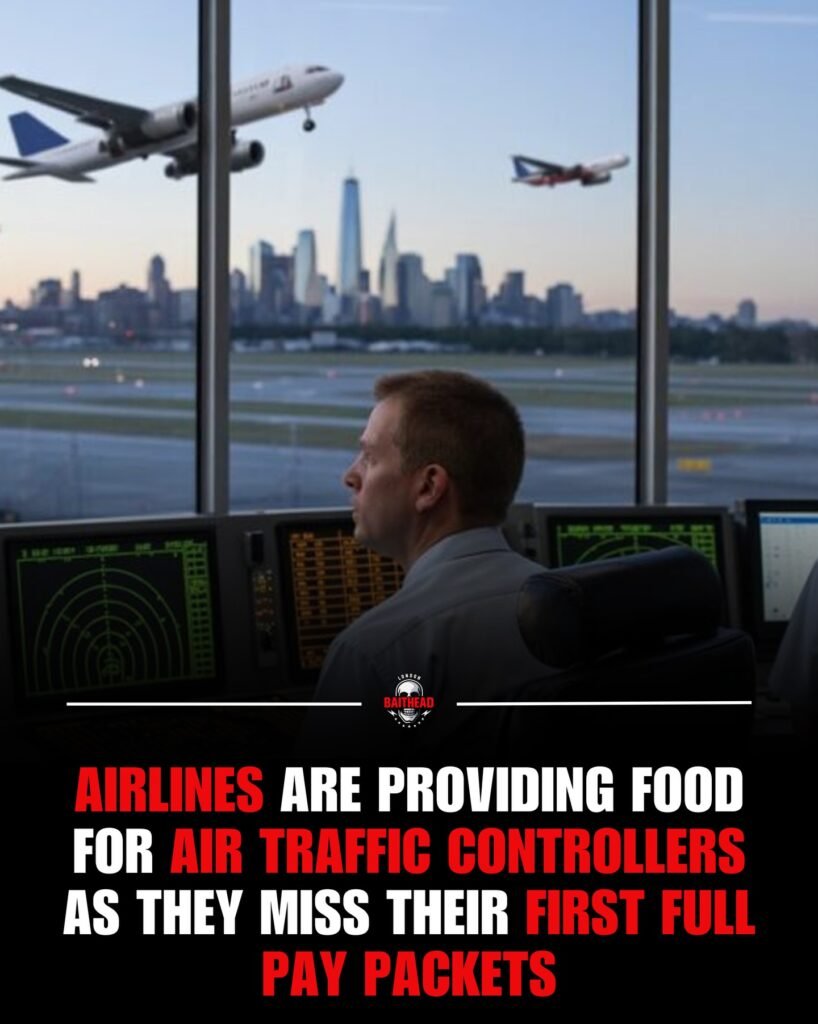
Airlines have begun providing food and basic support to air traffic controllers after reports emerged that many controllers missed their first full pay packets, raising concerns about staff welfare and aviation safety.
The image shows an air traffic controller at work in a control tower, monitoring aircraft movements against a busy city skyline as planes take off and land in the background. It highlights the high-pressure environment in which controllers operate—an environment that depends heavily on focus, precision, and reliability. The accompanying message underscores the seriousness of the situation: despite their critical role, some controllers are experiencing financial strain due to delayed or incomplete salary payments.
According to industry sources, administrative issues and ongoing staffing challenges have contributed to the pay disruptions. In response, several airlines have reportedly stepped in to provide meals and refreshments to controllers during long shifts. While the gesture has been welcomed as a show of solidarity, it has also drawn attention to deeper systemic problems within aviation management and workforce planning.
Air traffic controllers are responsible for maintaining safe distances between aircraft, managing takeoffs and landings, and responding to emergencies in real time. Any added stress—especially financial insecurity—raises concerns about fatigue, morale, and long-term retention in an already demanding profession.
Unions and aviation experts have emphasized that temporary measures, such as providing food, cannot replace the need for timely and reliable pay. They warn that continued delays could worsen staffing shortages and increase the risk of operational disruptions across airports.
As air travel demand continues to rebound, the situation has renewed calls for aviation authorities and governments to address compensation issues swiftly. Ensuring that air traffic controllers are properly paid, supported, and valued is widely seen as essential not only for workers’ well-being, but for the safety and stability of the global aviation system.