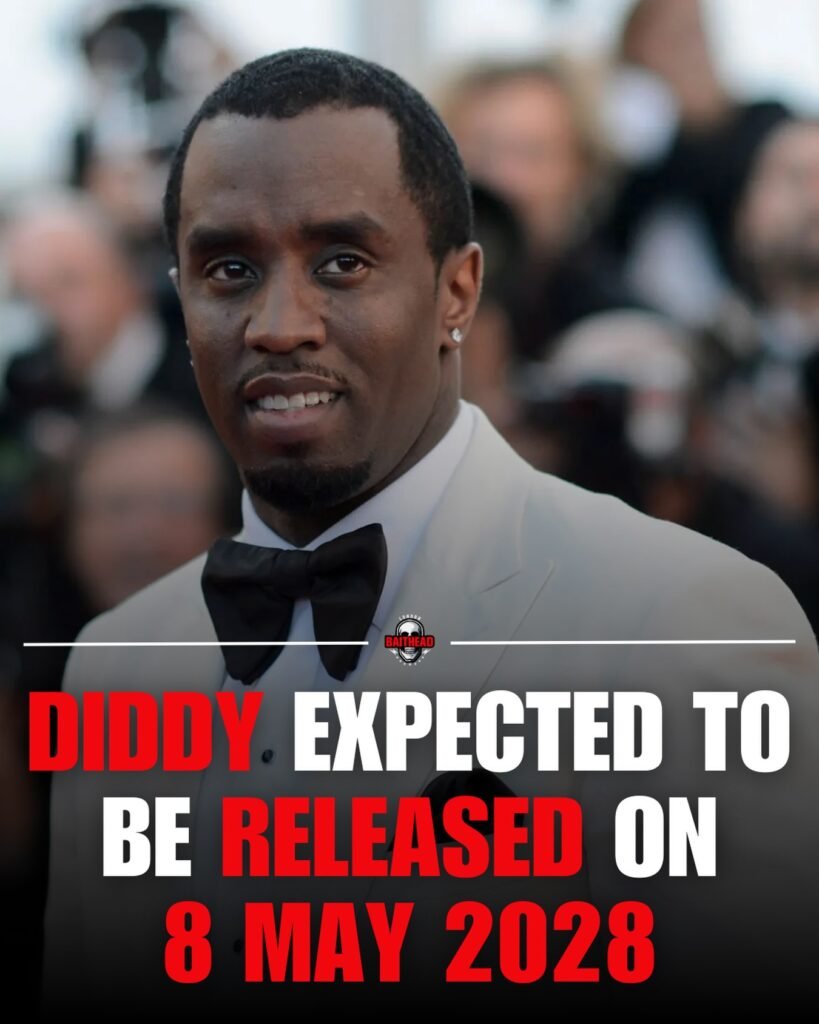
The image circulating online presents a sharply dressed music mogul on a red carpet, paired with bold text declaring: “Diddy expected to be released on 8 May 2028.” Designed for instant impact, the graphic uses stark red-and-white typography to command attention and provoke reaction. At a glance, it looks authoritative. On closer inspection, it reveals something more complex about how information—and speculation—travels today.
Visually, the photograph evokes prestige and celebrity culture: a formal tuxedo, bright lights, and a blurred crowd of cameras in the background. This contrast between glamour and the gravity of the headline is intentional. It heightens emotional response, drawing viewers into a narrative that feels both sensational and consequential.
Yet the wording is crucial. The phrase “expected to be released” signals speculation rather than confirmation. No official sources are cited, and the image itself offers no context—no court reference, no statement, no timestamp. In the social media ecosystem, such design choices can blur the line between verified reporting and rumor, encouraging rapid sharing before facts are checked.
This image is a case study in how modern media works: bold claims packaged for virality. In an era where visuals often outrun verification, audiences are left with a responsibility to pause, question, and seek reliable sources. Headlines framed as predictions can easily be mistaken for outcomes, shaping public opinion without solid grounding.
Ultimately, the image says as much about our information culture as it does about its subject. It reminds us that credibility doesn’t come from font size or dramatic color, but from transparency, sourcing, and context. In a world driven by scrolls and shares, discernment remains the most valuable skill of all.