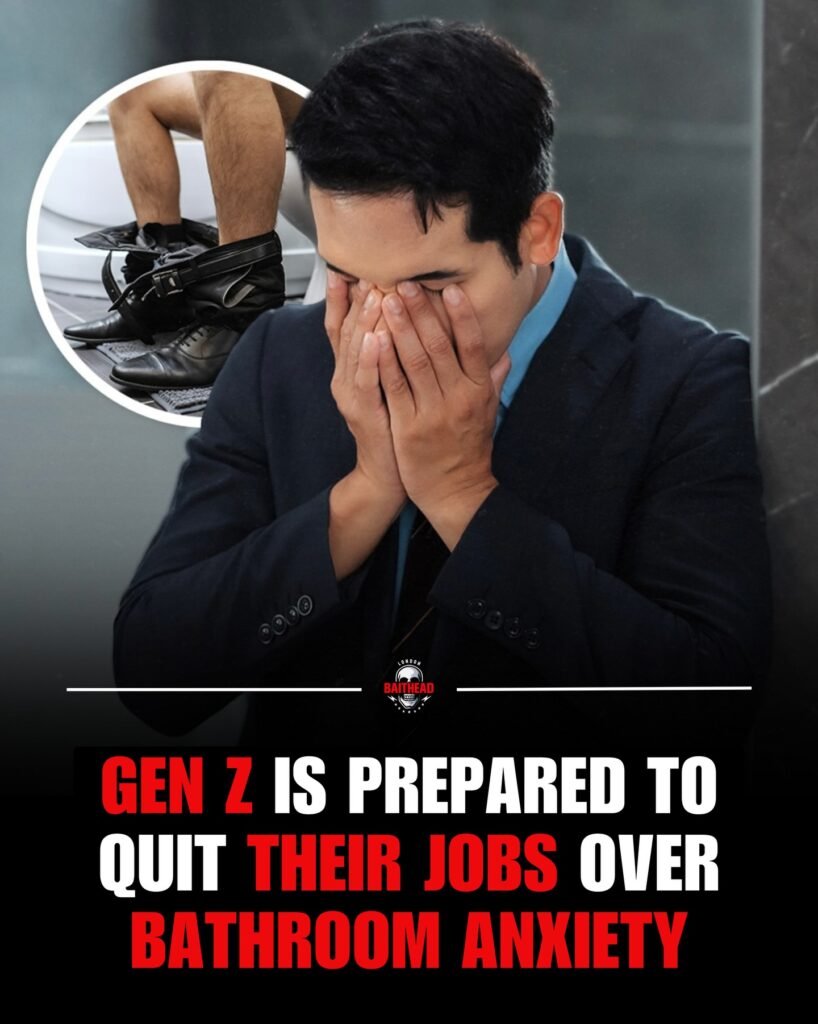
A striking image circulating online shows a young office worker in a suit, head buried in his hands, overwhelmed. In a smaller inset, a bathroom scene hints at the source of distress. Bold text across the image declares: “Gen Z is prepared to quit their jobs over bathroom anxiety.” Whether provocative or sincere, the image taps into a real and growing conversation about mental health, workplace culture, and how younger generations experience employment differently.
What Is “Bathroom Anxiety”?
Bathroom anxiety—sometimes referred to as paruresis (shy bladder) or broader restroom-related stress—includes fear, discomfort, or panic around using workplace bathrooms. Triggers can range from lack of privacy and cleanliness concerns to time pressure, rigid break policies, or fear of judgment. For some, it’s a mild inconvenience; for others, it’s a daily source of anxiety that affects concentration, productivity, and overall well-being.
Why This Resonates With Gen Z
Gen Z entered the workforce amid unprecedented disruption: a global pandemic, remote work norms, heightened awareness of mental health, and economic uncertainty. This generation tends to be more open about boundaries and psychological safety—and less willing to tolerate environments that disregard them.
Several factors amplify the issue:
- Open-plan offices and surveillance culture: Shared spaces, badge tracking, and strict break monitoring can make basic needs feel scrutinized.
- High stress and low autonomy: Entry-level roles often come with limited control over schedules, intensifying anxiety around stepping away.
- Mental health awareness: Gen Z is more likely to name anxiety as a legitimate workplace concern rather than silently endure it.
Is Quitting Really on the Table?
The image’s claim may sound extreme, but it reflects a broader truth: people leave jobs when small, chronic stressors accumulate. Bathroom anxiety isn’t usually the sole reason for quitting—it’s a symbol of something larger. When employees feel unheard, unsupported, or embarrassed for having basic human needs, disengagement follows.
What Employers Can Learn
This moment is less about bathrooms and more about culture. Practical steps can make a real difference:
- Ensure privacy and cleanliness: Adequate stalls, soundproofing, and regular maintenance matter.
- Flexible break policies: Trust-based systems reduce stress and improve morale.
- Normalize conversations about well-being: Clear signals from leadership that health comes first can defuse anxiety.
- Offer accommodations discreetly: Simple adjustments can help without singling anyone out.
The Bigger Picture
The viral image works because it compresses a complex issue into a single, emotional frame. It challenges workplaces to reconsider what “professionalism” means in 2025. For Gen Z, dignity, mental health, and humane policies aren’t perks—they’re expectations.
Bathroom anxiety may be the headline, but the story is about respect. When workplaces get that right, retention, productivity, and trust tend to follow.