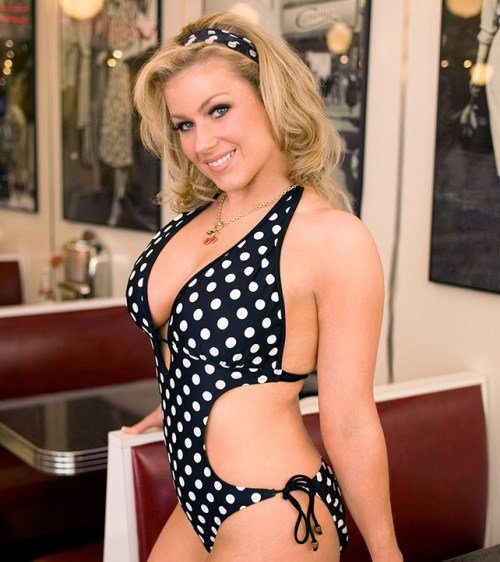
If professional wrestling is a carnival of personas—tough guys, high flyers, damsels turned destroyers—then Kara Elizabeth Drew was the carhop who brought a milkshake and a slap. Underneath the roller skates and pink satin, “Cherry” was the kind of performer who slid into the spotlight with style and skated away with your attention, even if the script said she shouldn’t.
Born in Morristown, New Jersey, and baptized in the fire of WrestleMania I at age nine, Drew fell for the glitz and chaos of the squared circle early. Miss Elizabeth was her muse. Randy Savage her north star. But unlike many who idled in nostalgia, Drew laced up and joined the circus.
She started on the indie scene under the names Kara Slice and Miss Kara, crisscrossing New Jersey VFW halls and gymnasiums, managing roughnecks and taking bumps on nights where the crowd could be counted on one hand. She paid dues in the truest sense: small-town promotions, weekend warriors, long drives, low pay. But her charisma was impossible to overlook—classic, deliberate, and a little dangerous, like a muscle car humming at idle.
Poodle Skirts & Power Slams: The Rise of Cherry Pie
In 2005, WWE brought her to Ohio Valley Wrestling, their developmental breeding ground for future stars. That’s where “Cherry Pie” was born—a retro valet with a Fonzie smile and the kind of poodle skirt that said sweetheart while her eyes whispered trouble.
She managed Deuce Shade and Dice Domino, the greaser tag team rebranded from a simpler time—a James Dean fever dream in the age of wireless headsets. They became The Untouchables, and Cherry was the cool constant. They were a throwback act, yes, but Cherry’s presence gave it purpose. She didn’t scream. She didn’t cackle. She let the bubble gum pop do the talking.
Cherry wasn’t just window dressing. She was strategy. She managed Deuce and Domino to three OVW Southern Tag Team Championship runs—an architect behind the pompadours.
Big Time, Big Stakes, and One Last Skate
When the trio made their SmackDown debut in January 2007 as Deuce ‘n Domino with Cherry in tow, they brought a shot of jukebox nostalgia into WWE’s polished, post-Ruthless Aggression era. The team picked up steam fast, winning the WWE Tag Team Championships in April with Cherry at ringside—less manager, more mechanic, tuning their swagger before every match.
But the wrestling business moves fast, and Cherry was soon unhitched from the boys. In April 2008, she finally got her in-ring chance—first in swimsuit contests, then in real matches. She pinned Victoria in her singles debut and stepped into a feud with Maryse. A brief win streak followed, and fans began to rally behind the plucky retro revivalist who had somehow become one of the most relatable women in the division.
She didn’t have a flashy moveset or a reality show gig. She wasn’t the future of the women’s division—but she was there, holding her own with nothing but timing, heart, and a hell of a babyface pop. That mattered.
But as quickly as it came, the music stopped. On August 15, 2008, Cherry was released from WWE. No long farewell, no farewell match. Just a pink slip and a nod. That’s the business. You lace up your boots, skate through the moment, and hope someone remembers the way you glided.
Back to the Roots
Cherry returned to the indie circuit as Cherry Pie—working with Jerry Lawler, pinning rising stars like Miss April (who would later become AJ Lee), and proving that while the spotlight dimmed, the light in her never flickered out.
In a twist no one expected but everyone needed, Cherry reunited with Deuce and Domino over a decade later for indie bookings—a one-night nostalgia act that proved some gimmicks age like vinyl.
Legacy on Wheels
Kara Drew never headlined WrestleMania. She never got a title run that made headlines. But she played her role to perfection and made the fans care—about her, about the team, about the moment.
Cherry didn’t reinvent wrestling. She didn’t have to. She just reminded everyone that sometimes a poodle skirt, a pair of roller skates, and a perfectly timed slap could still steal the damn show.
And in a business built on exaggeration, that kind of quiet impact is about as real as it gets.