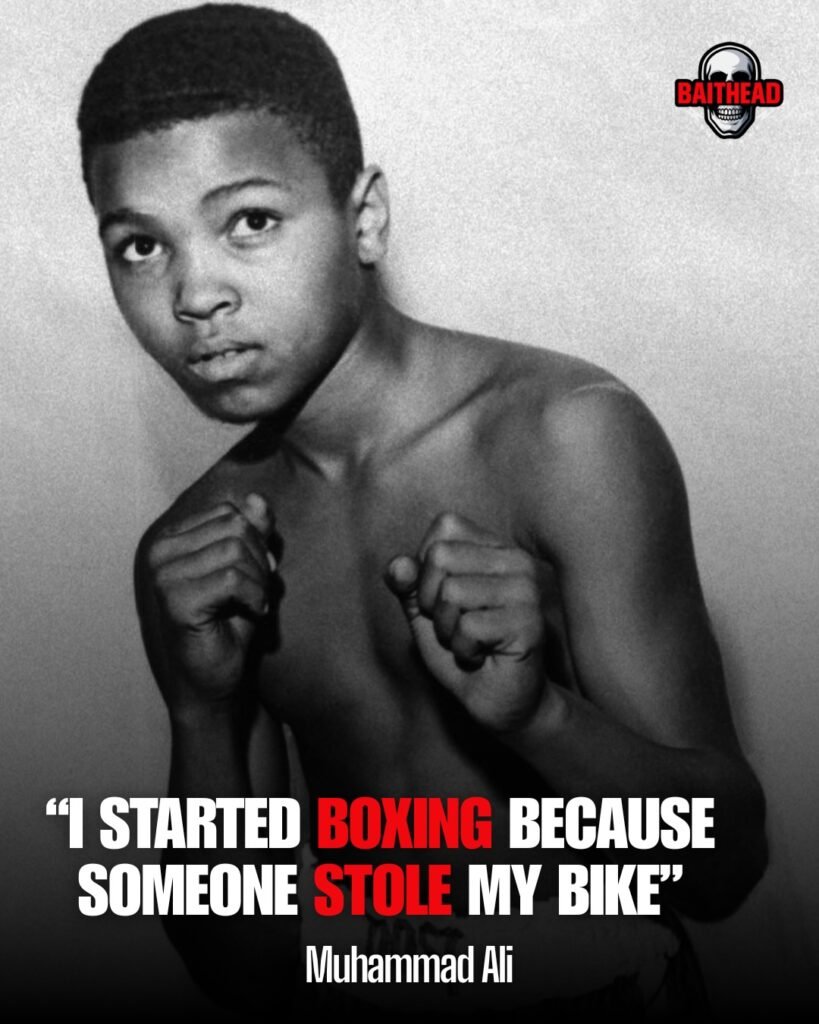
The image is simple, powerful, and timeless. A young Muhammad Ali stands bare-chested, fists raised, eyes alert with a mix of innocence and resolve. Beneath him, a quote that sounds almost casual in its honesty: “I started boxing because someone stole my bike.” What appears at first like a humorous origin story unfolds into a profound lesson about how life often redirects pain into purpose.
As the story goes, Ali—then still a boy—reported his stolen bicycle to a police officer who also happened to be a boxing trainer. Angry and determined to punish the thief, he was told he’d better learn how to fight first. That advice didn’t just teach him how to throw punches; it gave him discipline, direction, and eventually, destiny.
The image captures the beginning of transformation. Life did not hand Ali greatness gently. It arrived disguised as loss, frustration, and injustice. What mattered was not the theft itself, but how he responded. Where many might have carried resentment, Ali channeled emotion into effort. He turned anger into training, disappointment into dedication.
This moment reflects a broader truth about life: the events that feel unfair often become the catalysts for growth. Life rarely announces its turning points with clarity. Sometimes they come through setbacks, through things taken from us, through moments that feel small at the time but echo forever.
Ali’s journey reminds us that life does not ask where we start—it asks how we adapt. Strength is not born fully formed; it is shaped by circumstance and choice. The fists raised in the photograph are not just those of a future champion, but of a young person learning to stand his ground in a world that had already challenged him.
Beyond boxing, Ali carried this lesson into everything he became—an athlete, an activist, a voice of confidence and conviction. His life proved that purpose can emerge from the unexpected, and that resilience often begins with a single decision to respond rather than retreat.
This image, then, is not only about a legendary boxer. It is about life’s quiet irony: how something stolen led to something built, how loss sparked legacy. It reminds us that what we do with our anger, our pain, and our setbacks can define us far more than the events themselves.
In the end, life doesn’t promise fairness—but it does offer opportunity. And sometimes, all it takes is one stolen bike to discover what we’re truly capable of becoming.