Introduction
“He Stopped Loving Her Today” was recorded in 1979 and released on April 14, 1980, as the lead single from George Jones’s album I Am What I Am. Initially, Jones himself thought the melody was too sad and the lyrics too morbid—yet producer Billy Sherrill persisted . When it finally hit airwaves, the song soared to No. 1, marking Jones’s first chart-topper in six years and earning him the Grammy for Best Male Country Vocal Performance in 1980. Over time, it has been enshrined as the greatest country song ever in numerous polls and preserved in the Library of Congress’s National Recording Registry.
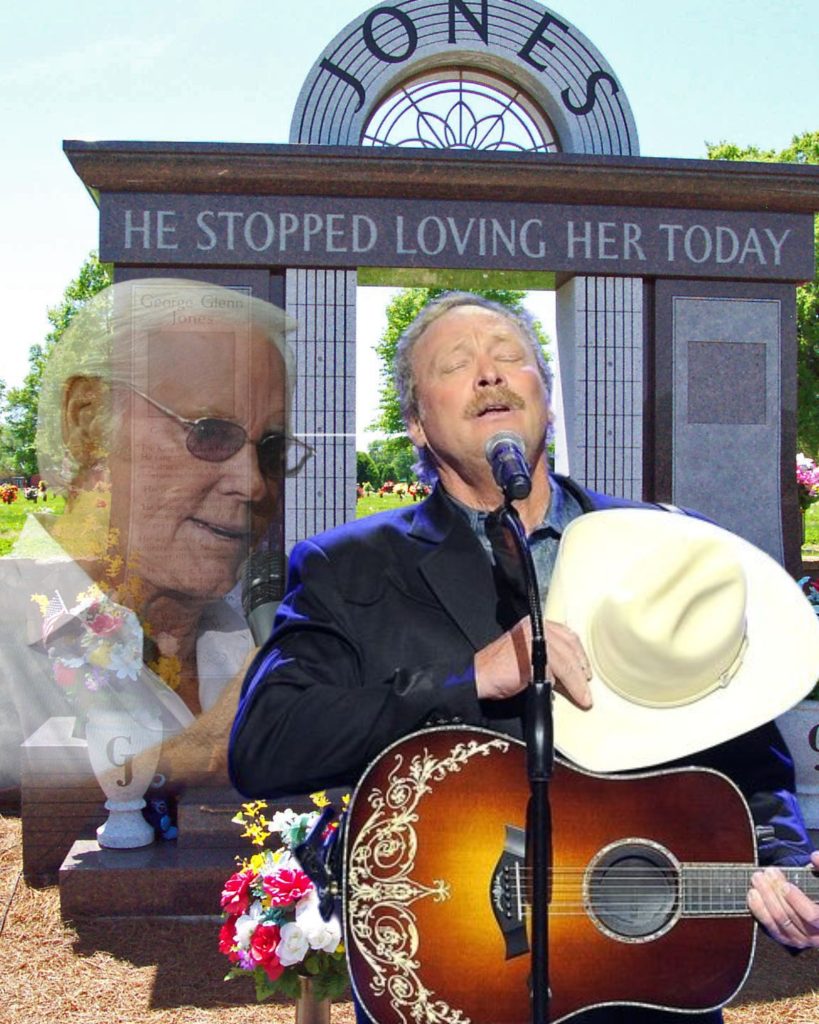
On May 2, 2013, during George Jones’s funeral service at the Grand Ole Opry in Nashville, Alan Jackson stepped to the microphone and began what would become an unforgettable moment. As he removed his hat in respect and sang the opening lines—“He said, ‘I’ll love you ’til I die’…”—the audience fell silent, many visibly moved by the familiar melody. Jackson’s clear, reverent delivery underscored both his own love for Jones and the enduring power of the song’s narrative.
In that hushed chapel, Jackson reminded everyone that country music’s greatest strength lies in shared emotion and storytelling. By choosing Jones’s signature song, he honored not only the man but the universal experience of love, loss, and remembrance. Even years later, watching the performance still brings a lump to the throat—a testament to both Jones’s legacy and Jackson’s heartfelt homage.