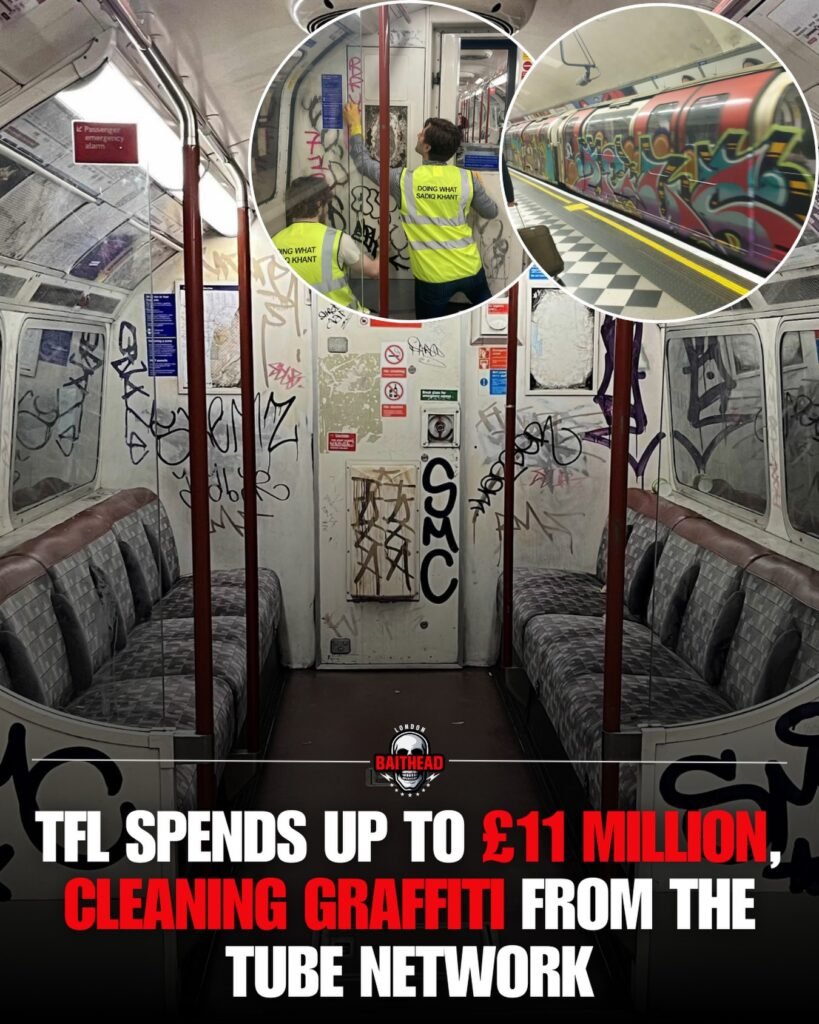
The image captures a stark contrast within London’s Underground: a carriage heavily marked with graffiti set against scenes of workers actively cleaning trains and a freshly painted exterior rolling through a spotless platform. Together, these visuals tell the story of an ongoing and costly battle faced by Transport for London (TfL) to keep one of the world’s busiest transport networks clean, safe, and welcoming.
Graffiti on the Tube is more than an aesthetic issue. Marked walls, doors, and windows can make passengers feel uncomfortable, reduce visibility of safety signage, and contribute to a perception of neglect. TfL estimates that up to £11 million is spent each year tackling graffiti and vandalism across trains, stations, and depots—money that could otherwise be invested in service improvements, accessibility, or fare stability.
The image shows staff in high-visibility vests carefully removing tags from carriage interiors, a meticulous and time-consuming process. Each incident of graffiti requires specialist cleaning teams, chemical treatments, and sometimes the withdrawal of trains from service, leading to disruption and additional operational costs. Externally, entire trains are occasionally taken out of circulation to repaint vandalized surfaces, highlighting how a single act can ripple across the network.
TfL maintains a zero-tolerance approach, aiming to remove graffiti as quickly as possible. The strategy is deliberate: rapid cleaning discourages repeat vandalism by denying visibility and recognition. Alongside cleaning, TfL works with the British Transport Police, uses CCTV, and pursues prosecutions where possible to deter offenders.
The images ultimately underline a broader message—graffiti is not a victimless act. The financial burden falls on taxpayers and passengers, while the consequences affect daily commuters who rely on the Tube. TfL’s significant investment reflects not only a commitment to cleanliness, but also to preserving the dignity and reliability of a transport system that moves millions of people every day.
In the quiet moments between stations and the constant rhythm of London life, the fight against graffiti continues—largely unseen, but undeniably costly.