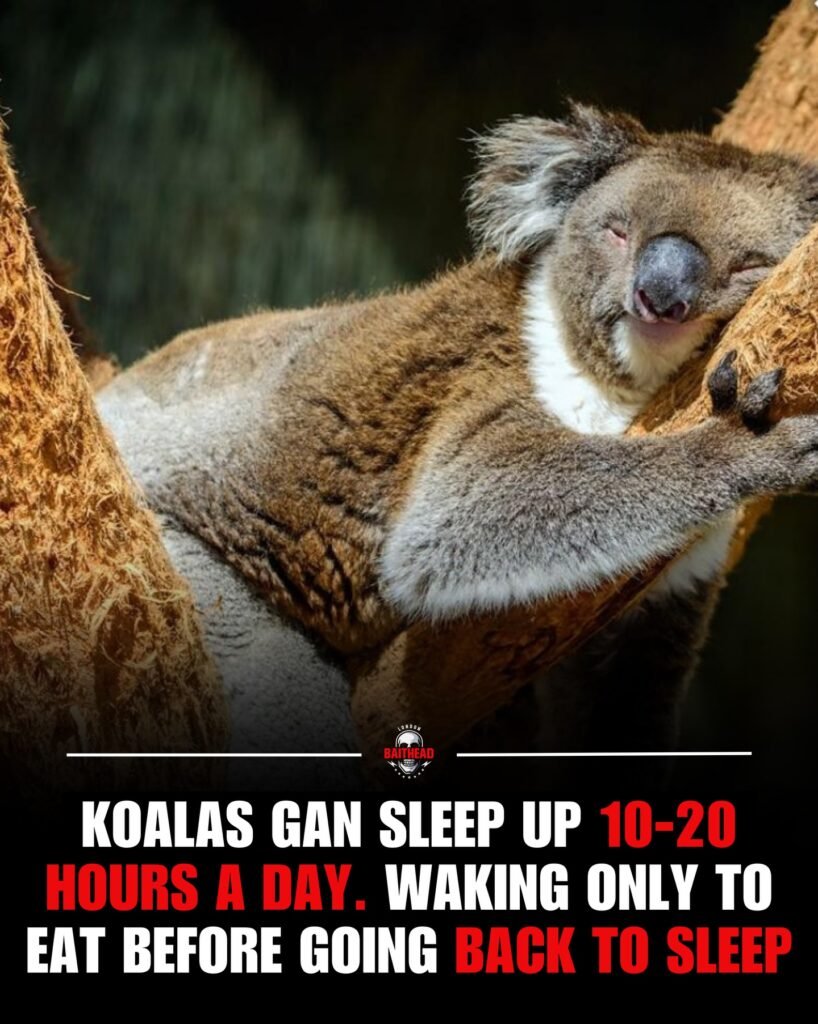
The image shows a koala peacefully draped over a tree branch, eyes closed and body completely relaxed. It perfectly captures one of the most fascinating traits of these iconic Australian animals: their extraordinary ability to sleep for up to 10–20 hours a day. Far from laziness, this behavior is a finely tuned survival strategy shaped by nature.
Koalas feed almost exclusively on eucalyptus leaves, a food source that is low in nutrients and difficult to digest. Extracting energy from such a diet requires significant effort from their bodies, which is why conserving energy becomes essential. Sleep, in this case, is not indulgence—it is efficiency. By resting for most of the day, koalas minimize energy loss and allow their digestive systems to do the hard work.
The image’s calm atmosphere reflects a life lived without rush. Koalas wake briefly to eat, slowly chewing leaves before retreating back into rest. This rhythm highlights an important lesson often overlooked in modern life: not everything needs to be fast. In a world obsessed with productivity and constant motion, the koala’s routine reminds us that balance and conservation can be just as powerful as action.
There is also a deeper ecological message hidden in the image. Koalas are highly sensitive to environmental change. Habitat loss, climate change, and heatwaves threaten their ability to rest and feed safely. The stillness we see here depends on healthy forests and stable ecosystems—without them, even this gentle cycle of sleep and nourishment becomes fragile.
Ultimately, the sleeping koala is more than a cute image; it is a symbol of adaptation, patience, and harmony with nature. Its lifestyle challenges human assumptions about value and effort, quietly teaching that survival—and well-being—sometimes comes from slowing down, resting deeply, and taking only what you need.