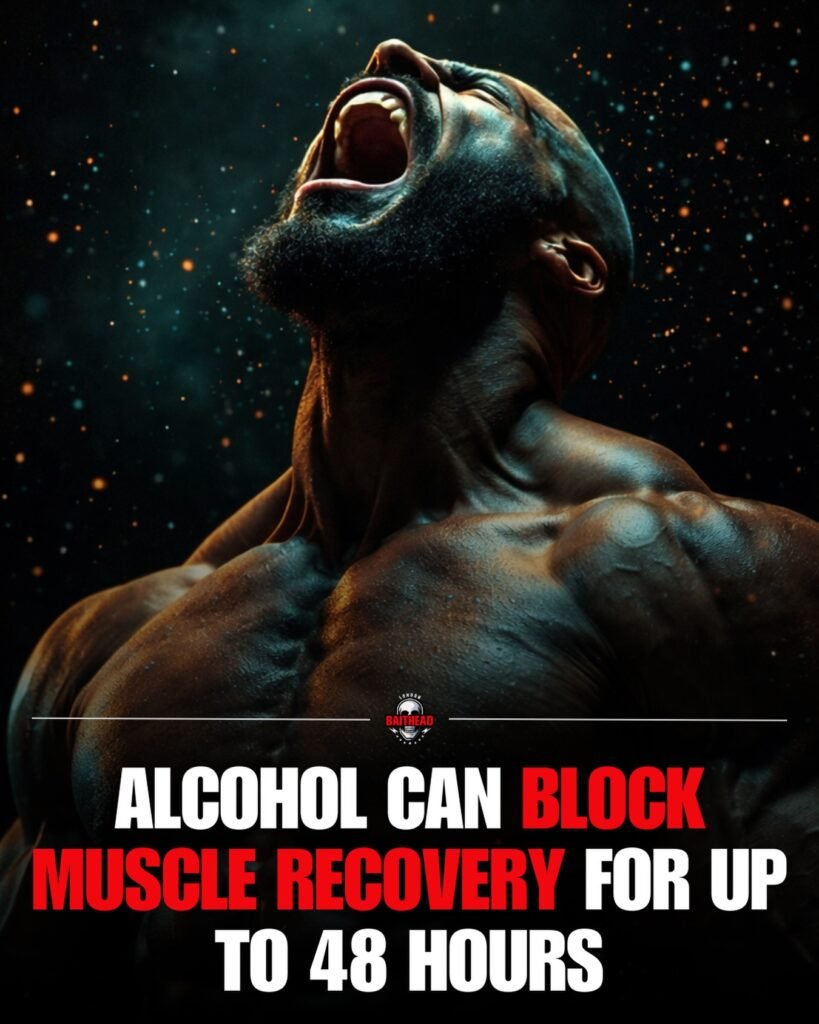
The image captures a powerful moment: a muscular figure, head thrown back, veins and sinew alive with intensity, as if the body itself is screaming. Around him, darkness and sparks suggest energy, effort, and strain. Beneath this raw visual power sits a blunt message: Alcohol can block muscle recovery for up to 48 hours. Together, the image and words tell a story many people underestimate.
Training is destruction before creation. Every hard workout creates tiny tears in muscle fibers. Recovery is the phase where the body repairs those fibers, making them stronger, denser, and more resilient. This process depends on sleep, hydration, hormones, protein synthesis, and proper nutrient delivery. Alcohol quietly interferes with nearly all of it.
When alcohol enters the system, the body treats it as a toxin. Instead of prioritizing muscle repair, it shifts focus to metabolizing and eliminating alcohol. Protein synthesis slows down, meaning muscles struggle to rebuild. Testosterone levels can drop, while cortisol—the stress hormone—rises, creating an internal environment that works against growth and recovery.
Sleep, one of the most critical recovery tools, also suffers. Alcohol may make falling asleep easier, but it disrupts deep and REM sleep cycles—the stages where muscles repair and the nervous system resets. The result is waking up feeling rested on the surface, but under-recovered underneath.
Hydration and nutrient absorption take another hit. Alcohol dehydrates the body and impairs the delivery of amino acids and minerals to muscle tissue. The pump fades, soreness lingers longer, and progress slows. That intense roar in the image becomes symbolic—not just of effort, but of frustration when hard work doesn’t translate into results.
The message isn’t about perfection or never enjoying life. It’s about awareness. One night of drinking can silently undo days of disciplined training. For athletes, lifters, and anyone serious about physical progress, recovery is not optional—it’s the foundation.
This image reminds us that strength isn’t only built in the gym. It’s built in the choices made afterward. Sometimes, the strongest move isn’t another rep—but saying no to what holds your body back.