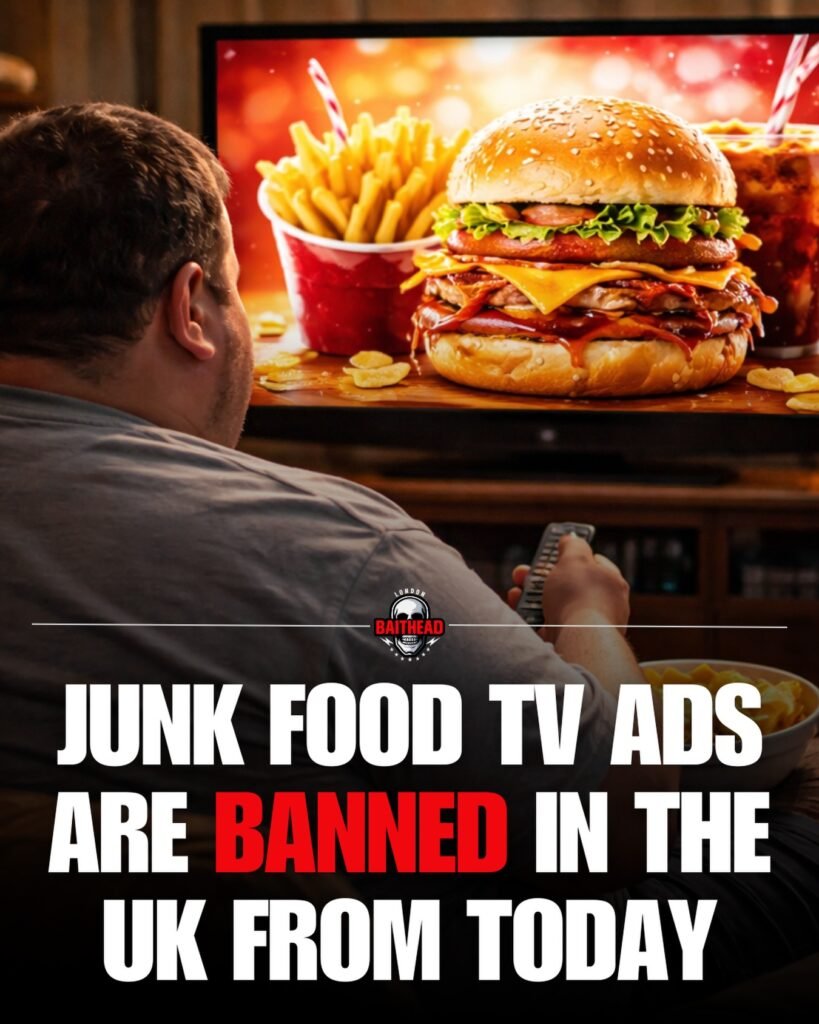
The image shows a familiar modern scene: a man sitting on a couch, remote in hand, eyes fixed on a television glowing with an oversized burger, fries, and soda. The food looks irresistible—glossy, stacked, and perfectly lit. Yet the bold text across the image delivers a stark message: “Junk food TV ads are banned in the UK from today.” Together, the visuals and words capture a turning point in how society views food, health, and the power of advertising.
At its core, the image speaks about influence. For decades, television has been one of the strongest drivers of eating habits, especially during prime-time hours when families and children are most likely to watch. Fast food advertising has not simply sold meals; it has sold lifestyles, convenience, comfort, and reward. The man on the couch represents millions of viewers whose cravings are shaped not by hunger alone, but by what appears on the screen.
The ban suggested in the image symbolizes an attempt to interrupt that cycle. By removing junk food advertisements from television, policymakers aim to reduce constant exposure to high-fat, high-sugar, and highly processed foods. The absence of these ads is meant to create space—space for healthier choices, for conscious decision-making, and for breaking habits formed through repetition and visual temptation.
There is also a deeper social message embedded in the scene. The oversized burger on the screen contrasts sharply with the stillness of the viewer. It reflects concerns about sedentary lifestyles, rising obesity, and long-term health issues. In this context, banning ads is not just about food; it is about responsibility—who should be accountable for public health, and how far governments should go in regulating what people see.
Critics of such bans often argue that personal choice should come first. They see the remote control as a symbol of freedom: the ability to switch channels, ignore ads, or make independent decisions. Supporters, however, counter that advertising is not neutral. It is engineered to persuade, especially vulnerable audiences like children, making regulation a form of protection rather than control.
Ultimately, the image captures a cultural shift. It suggests a future where the loudest voices on television may no longer be selling indulgence at every break, but where viewers are encouraged—directly or indirectly—to rethink their relationship with food. Whether seen as progress or overreach, the message is clear: what appears on our screens matters, because over time, it shapes what ends up on our plates.